Showing posts with label robert mckee. Show all posts

Friday, April 25, 2008

It's Academic

"What need is there to think of these events as having three acts? None."
-James Bonnet

custom_logo_crest_comb2.gif

Why the 'three-act' structure? Why not the 'three-part' structure? The 'five-act plan' or the 'ten-sequence' tale?

It's purely academic.

First there were stories. People studied them and found similarities in those that worked, elements that seemed to lack in those stories that didn't. To be able to talk about it, they gave those elements names.

It's that simple.

Aristotle talked about 'beginning, middle, end', or rather: beginning, complications and denouement. Theater has continued using this rough three-act structure.

In the late seventies, Syd Field built further on this and he designed 'the paradigm', a 'three-act structure' specific for movies.

Since then, many have studied the structure of films and refined that crude framework into something far more practical and sophisticated. Beyond Aristotle, but firmly grounded in the foundations he built.

The motivation to study the components of story - for me and many others - has always been partially a scientific curiosity into 'how stuff works'. The three-act structure has proven to be a handy tool.

But the other motivation has always been: money. A better understanding of how audience perception works, may result in a more successful approach to screenwriting. Good business for screenwriters and producers.

Plus: with hundreds of thousands of aspiring screenwriters around the world, there is business potential in selling your ideas to this group. Syd Field soon found out after the release of his book SCREENPLAY.

Those that came after him learned that merely re-hashing old models won't work; you will need to come up with an improvement of the existing theories. That's one reason why authors keep putting their own spin on the material.

On the other hand, we have to constantly update our understanding of story structure for the screen as audience expectation changes. Cinema goers and television viewers become more and more demanding.

Still, the whole damn thing is entirely conventional.

The only purpose is for you to find a way to improve your story. And by 'improve', we mean: increase the chances of reaching a wider audience, according to principles that can be learned.

McKee says something like: these principles don't say "You MUST do this." They say "IF you do this, then...". In other words, these principles have been empirically deducted from studying stories that work.

Scientific? Oh yes.

No-one cares whether you have three acts, eight sequences, twelve or one hundred and eighty-eight journey stages, as long as it works.

Why to speak of three acts? Because if you don't, and you still want to talk story, you'll have to come up with an entirely new system. And convince the rest of the world to use it.

If, like James Bonnet, you don't want to use the three-act structure, go for your life. You may well achieve the same - or even better - results. But when it comes to discussing your work with others, you may find yourself in a foreign country. And no-one speaks your language.

You may find it's a pretty lonely world out there.

Friday, March 07, 2008

Exciting Coincidence

"A strong inciting incident is an event that happens to the protagonist, never an action by the protagonist", I said.

Then I asked you for exceptions, i.e. strong Inciting Incidents that
are actions by the protagonist.

Now have a look at the first three responses I received: 1.) THELMA & LOUISE, 2.) PULP FICTION and 3.) KING LEAR.


Look at them again and see if you remember 1) who causes the inciting incident and 2)how does the character end in the story?
The answer is baffling.

1. Louise kills a man. The end: Louise dies.
2. Vincent kills Marvin. The end: Vincent dies.
3. King Lear excludes Cordelia. The end: King Lear dies.

For these three, Tom, Brett and Margaret each earned themselves three months Premium Subscription. Well done.

Recently UNK blogged about Inciting Incident (another exciting coincidence: one day earlier, someone hit my web site using the key words inciting incident definitions.) and among his favourite I.I.'s he lists COOL HAND LUKE.

Here we go:

4. Luke cracks open parking meters. The end: Luke dies.

Exciting coincidence? Or does it mean that EACH TIME a protagonist incites the story, we have a down ending? Probably not. Perhaps the readers of this blog have a slight predilection for somber movies. ;)

Anyhow, I found the examples you sent to me striking.

More exceptions to the "event-not-action" rule:
- Simon: "Not my kind of thing really, but what about Ferris Bueller's Day Off?"
- Simon D.: "What about any story where the protagonist activates something, like the Princess and the Frog in the pond, Pandora's Box etc"
- Jim: "If Russell Crowe is the Protagonist in 'Yuma', then it happens in that."
- Chris: "3 Movies that the protagonist is responsible for the inciting incident: Scarface, June, O Brother Where Art Thou."
- Robert: "Chow Yun Fat's Hitman character accidentally blinds a girl during a hit on a triad boss that he is carrying out. Therefore he himself sets in motion the "inciting incident" and for the rest of the film sets out to redeem himself and possibly help the bling girl regain her eyesight by doing more "hits" to pay for the operation!"

Thank you all! It was a great exercise.


WHERE TO START

As to screenwriting theory, there are so many sources of conflicting advice it is difficult to know who to listen to. Each new piece of advice can be as convincing as the one that came before it. What should you do?

How do you choose who to listen to?

Do you take the word of

  • the most influential,
  • the most popular,
  • the most convincing,
  • the loudest,
  • the most confident,
  • or maybe what they perceive to be the safest.

As a person who dishes out daily doses of advice I am as guilty as anyone out there who tries to offer opinions of what you “should” do.

The fact is, at worst people do not have any idea what will work for you, and at best they can only rely on their own experience. Certainly I give you the benefit of what I have learned through my work, but you still have to work out what will work for you.

I am still learning, things still take me by surprise. You may have read me say before, I am of the opinion you can learn something from every person you meet. Your job is to not blindly accept what you are told but collate it, cogitate on it and apply it in your own unique way.

Work out the approaches that suit you best, that fit what you are trying to achieve and how. Which stories resonate with you, and enthuse you, separate out those that leave you cold.

You can never take the same journey twice, your journey is yours and yours alone, but you can learn about possible pot holes and beauty trails from people who have traveled a similar path before you.

Here I have to confess something: all the above (except the first four words "As to screenwriting theory") was taken literally from Chris Garrett's blog on blogging. When I read it, I found it so completely true for pretty much any field of learning, including ours.

My own little piece of advice on where to start learning?

Just write, every day, undisturbed by what you learn or what people say. While you are doing so, go through the list below. And take your time.

1. Read McKee's STORY, or better: listen to the audio book. You won't learn too much about the craft, but you'll get a feel for what you're in for. If you have less time and you want to be fashionable, read Blake Snyder's SAVE THE CAT.

2. Take a craft workshop. Mine, Hauge's or John Truby's. Read the stuff they have published.

3. Watch movies a second time to break them down into acts, sequences and plot points. Dozens of them, until you start seeing the light.

4. Carefully choose a story consultant you can trust and you like to work with. You will continue to learn, but now specifically about your own strengths and weaknesses.

At this point, you will have found your vision and direction. You will see which of the savants out there fall within your view on storytelling. Read their books, join their seminars.

Finally, you are on your own, confidently.

And while you just continue writing, your craft will improve, and improve, and improve...


WHERE ARE YOU GOING? YOU AND YOUR HERO?

It has been the core of my consultancy and teaching: the protagonist needs a clear and present desire.

Nothing new, though, Michael Hauge has been teaching this for much longer. In the context of Michael's visit to Australia in two months, I interviewed him and the full text will soon be available to my clients and for subscribers of The Story Dept. Here's an excerpt:

Karel: Two problems I often find in screenplays by inexperienced writers are 1) the choice of protagonist and 2) the key qualities of the protagonist. Would you mind giving us an insight?

Michael: In almost every case where the problem seems to be choosing the wrong protagonist, the writer isn't clear about what the story concept is, about what the hero's visible goal is.

In other words: if the writer is operating under the belief that they just need to portray characters and show them going through a situation in their life and let's see what happens, then that's the quicksand they have stepped into. Because movies are about heroes who are pursuing specific visible goals.

It is about stopping the serial killer, about escaping from the panic room or from N.Y. or from Alcatraz, about winning the love of another person or winning an athletic competition. Or it's about getting the buried treasure. But the goal must be specific, must be visible, must have a clearly defined end point.

The first part of the full interview is now online on the Premium Ed. As usual, it will be visible for a few days only. After that you will need a subscription to see it. Part two and three will follow over the next few days, as well as a podcast (audio) version of the telephone interview.


NO POV, NO PLAY

The RATATOUILLE DVD shows has 1 (one) deleted scene. It is a long, uninterrupted travel from a wide establishing shot of the Paris skyline down to street level, through the Auguste Gusteau restaurant and ending on Remi, our hero.

The shot could have been spectacular, reminding of the opening shot of TOUCH OF EVIL and its pastiche in THE PLAYER.

Brad Bird's commentary talks about the reason why it was cut and it is simply: Point of View.
ego.JPGThe natural question that would occur is "Why would you cut this spectacular shot?", because it is obviously great. "I want to see that film!" Well, I feel that way, too.

The problem, once you get passed the initial sort of rush of seeing this very elaborate shot that shows you a lot of different things in one shot and very impressively, is that it is no character's point of view.

It is just a sort of God-like shot where you're presented this whole world and it is spectacular and there have been many fine shots like that - Touch of Evil being one - that were great but I felt that this is Remi's movie and it needed to be Remi's perspective.

And I want to know the emotions that lead up to Remi looking into the kitchen. I don't just want it laid on a platter, you know, just cut to Darth going "You're my son, Luke."

We should be with Remi when he has that moment. We should know how he is experiencing it and what is he feeling when he is experiencing it. And you kind of aren't, this way.

It did lay everything out, but I don't think that it took the audience with it.

-Brad Bird

Brad Bird's reasoning confirms what I have written about 'omniscient POV': it is weak, or worse, it doesn't work.

Movies are inherently about empathising, even identifying with characters.

When you step out of the protagonist's POV, it should be to shift to another POV, never to take an omniscient POV.

Omniscient POV is devoid of emotion.

Read some more about Point of View here.

Tuesday, January 08, 2008

The Secret

While all of you were out celebrating New Year's Eve, I was watching David Cronenberg's eXistenZ on DVD. Not that I'm such a pathetic hermit; it was just my wife's fun idea of closing the Old Year. She admitted afterwards she might have been wrong. Missing the Sydney Fireworks and all that.

Meanwhile, the Story Dept. has entered its third calendar year, offering workshops, one-on-one consultancy PLUS a Premium Version of this blog, exclusive to clients and
subscribers. The Hero's Journey continues, the obsession grows.


THE HERO'S SECRET

eXistenZ, named after a fictitious virtual reality video game, was released around the same time as THE MATRIX; the timing having been an excuse for its poor performance. I was surprised to see Roger Ebert's review not really giving us any critical assessment of the film; all he says is:"eXistenZ' is likely to appeal especially to computer game players". He probably means: "It sucked but I don't know why."

The film remains original and entertaining but I believe the end holds a crucial mistake as it turns out our heroes have been keeping a secret from us. This goes directly against a key principle of writing for the screen: a protagonist must share with us their knowledge and emotions.

In the Premium Edition (see also below) I will look at a few more examples of heroes who are ruining box office prospects by withholding information or being unreliable for other reasons.


THE WRITER'S SECRET

When I asked one of my most loyal clients for a testimonial, he refused. I was baffled. "Karel," he said, "if you knew where the gold was buried, would you go and tell everyone?" At first I thought that was a lame excuse, but then I had no reason NOT to believe him. He is a film industry professional who always puts his money where his mouth is. He is continuing our collaboration throughout 2008. But I'm not allowed to tell anybody.

My Unknown Client says about the story theory I'm teaching and applying during my consultancies "it's the film industry's best kept secret." In many ways, he is right. Despite the title of Robert McKee's bestselling screenwriting manual 'STORY', he only dedicates a relatively brief section to the principles of story structure. Many screenwriting manuals do mention the three-act structure but forget to explain why it works and why it is successful. Without a proper foundation, the 3-act structure remains dead theory.

Some people say Australian film schools are gravely deficient in the area of structure and if I am to believe my clients, many AWG script assessors tend to barely brush over it, too. In an article in The Australian last week, Joan Sauers, Billy Stoneking and Duncan Thompson blamed Australian scripts. Again. And again they forgot to mention what William Goldman said: “Story is structure”. I say: we have excellent writers, but they fail to structure their stories. For that reason, the drama of screenwriting is not going to save our feature films. Daytime TV has drama. Only I am not going to watch it.

My Unknown Client is right: what pretty much every screenwriter in the rest of the world knows - and what some practice -, seems to remain the best kept secret in Australia.


UPCOMING WORKSHOPS

Since September, about 60 people have attended my story workshops in NSW and the ACT. On 3 February I will be teaching my first workshop in Queensland, at the International Film College. For registration go directly to the web site of the IFC.

The next Story Workshop in Sydney will take place on Sunday 10 February at the NSW Writers Centre. For details and registration go here. The course fee is $99 for early birds (payment received on 20 January), for subscribers of this blog and for members of the NSW Writers Centre. Full registration is $125 for the day, this also includes tea and coffee, a CD with software, a glossary and a list with recommended reading.

(Note: The workshop is particularly recommended if you were thinking of hiring me as your script editor or story consultant. It introduces the essential vocabulary needed to discuss screen story and gives you an insight in the background and inspiration of my consultancy work. Workshop students also get access to the Premium version of the Story Dept. See below.)


CELTX IS TAKING OVER

I first recommended Celtx in October 2006. Until a year ago however, I didn't know anybody who was actually using the software. Since then, a handful of my new clients have taken the dive and are satisfied to the extent they are not (any longer) considering purchasing a commercial package.

Celtx keeps adding new features, while it remains free to download. A great tool is the file upload feature, allowing you to save a safety copy of your work on the private and secure Celtx servers. If you wish to make your script known to the world, you can make the file public. You don't have to.

Recently a client wanted to import a Word document into Celtx. The software doesn't provide for this (yet) but the support pages describe a method, which - in my case - worked beautifully.

And thanks to Mike Jones I now know you pronounce Celtx with a 'k'. The name actually stands for: "Crew, Equipment, Location, Talent and XML". The guys behind it don't call it screenwriting software, but 'media production software'.


SCRIPT LAYOUT AND FORMAT

The main raison-d'etre for script software is to get the formatting right. Unfortunately there are still a myriad of conventions that are not automatically dealt with and if you don't get them right, you are not considered a pro. Yet another reason why not to spend large amounts of money on software until you are actually making money writing.

Don't get me wrong: you MUST get your formatting absolutely right. When you pay a story or script consultant, you don't want to waste your money on layout notes.

Three of my clients who paid for script assessments through the Australian Writers Guild or directly to one of the script services, found pages of detailed feedback on format. As a matter of fact, the space it took up in the assessment seemed disproportionate to the essential and professional story and script advice you would expect. You don't pay between two and eight hundred dollars to find information you can perfectly find in a book under $50 or even for free on the web. The AWG are currently reviewing their script assessment service and IMHO it's about time.

Do I have the be-all and end-all solution to your formatting nightmares? No But I might just have a little life saver.

After reading a plug on the Mystery Man blog, I ordered a copy of David Trottier's The Screenwriter's Bible and found it one of the best resources for international script formatting. The book covers more than that but I value its section on formatting above anything else. Contrary to a number of other books and publications, it deals adequately with a number of specific issues, such as: phone conversations, intercutting, computer text, montages etc.


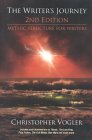
THE STORY DEPARTMENT: PREMIUM EDITION

The Premium Edition of The Story Dept. is now live. For the cost of a coffee every fortnight you will get:

1) Premium Membership: unrestricted access to all past and future editions of the newsletters, for one year.
2) Stage One Story Consultancy, phone feedback FREE once per year (value AUD$89).
3) Stage Two and Three at loyalty discount rate, (up to AUD$72 off the advertised rate, each).
4) One Virtual Coffee: double-shot decaf skim soy cappuccino.

For all the above you will pay the grand sum of $89 If you were planning on taking the Stage One Consultancy, it means you're paying $0 for everything else. (Offer applies only until the publication of the next post on this blog)

Some ideas for upcoming Premium Editions:

- How to divide your story into three acts. There are many theories and it doesn't matter which one you follow, as long as it helps you to improve your story. Fact is: many writers aren't even sure where their stories' acts start or end.
- Structural Analysis. It's something I've long wanted to include in these articles and will soon do in the Premium Edition: Not for the sake of it but to help you identify crucial story points. I recently watched DIE HARD (#1) again and compared notes with the guys of MovieOutline.com (note: I am not endorsing the software). Interesting result...
- A bibliography of popular screenwriting books, plus notes on what I believe to be their strengths and weaknesses.

Sign up now for one year on the Subscription Page. The process is automatic and effective immediately upon payment through PayPal. You can have your temporary username and password within minutes. (Present clients may get access at no additional cost - conditions apply.)


OFFICE SPACE FOR RENT:

My friend Zoe Harvey is looking for people interested in sharing office space:

"Office space for rent at 10a Hall Street, Bondi Beach. The office is centrally located in busy Hall Street, one storey above the street and one block from Campbell Parade and the beach. There are two rooms for rent, both with polished floorboards, high ceilings and new paint. The rooms can be rented either separately or together. One room is approximately 4 x 6 metres (24m2) and the adjoining sunroom which is 2 x 8 metres (16m2). Each room is $200 per week rented separately or if rented together $300 per week.

The office is fully serviced and rent includes all electricity, gas, water and ADSL 2 connection with unlimited download. The office is networked via airport hubs. The office currently houses businesses involved in film production and graphic design. Companies involved in film, TV, video, graphics or related industries would be best suited.
Incoming tenants will need to install their own phone lines. There is no off-street parking.
For more information please contact: Greg Read on 02 - 9365 5300 during business hours or email: greg@paperbarkfilms.com or Zoe Harvey on 02 - 9130 2544 / 0403 236 252 during business hours or email: zoe@torridfilms.com"


L.A. FILM FEST LOOKING FOR OZZY SHORTS

Friend writer/filmmaker Elizabeth Ban told me the HOLLYSHORTS film festival in Hollywood is looking for Australian short films. Here are the festival details:

HollyShorts Film Festival, Marina Del Rey, CA
February 15, 2008 - Earlybird Deadline
www.hollyshorts.com/


OUR NEW LOOK

As you see I have switched the template for the blog as too many people didn't like the 'white on black'. If you prefer the old look, let me know by joining the poll in the margin of this blog. Many thanks!

Saturday, November 18, 2006

Seizing the Sword

Once past the Ordeal, the hero is ready to Seize the Sword, says Chris Vogler. In July we received development funding for THE MORTAL COIL. Next it was selected into SPAAmart and now the AFC is funding the production of the animation ACID SUN, after only one application. It sounds like OZZYWOOD Films is seizing the sword. What is the secret? And is the Ordeal now finally over??
I have just returned from SPAAmart, Australia's film financing market, where Wojciech and I pitched THE MORTAL COIL to twenty-four industry executives from Australia and overseas. It was only the second time ever I applied for this competitive market. One hundred percent hit rate. Luck? Possibly. But my recent string of successes cannot be ignored as an unusually high hit rate. An AFC project manager with impressive film credits recently told an audience how his applications used to be rejected at a rate of 8/1. No future for me as an AFC project manager, I guess...

If luck is one factor, what other factors are there? The talent of the writer, first and foremost. I have the honour and the pleasure of working with brilliant people. Without an interesting concept you can edit until the cows come home. THE MORTAL COIL has the support of Richard Taylor at the famous Weta Workshop in Wellington. Given the amazing track record of that effects house, their attachment is a major bonus and it helps convincing decision makers that this project will fly.


STORY VS. SCRIPT EDITING

There is no doubt in my mind that the story development approach is another crucial factor in those recent funding successes. I used to get sucked into reading, analysing and assessing screenplays. Most scripts have enough weaknesses on the scene level for a script editor to provide his money's worth in surface level feedback. The writer takes on board all the comments and does a - often completely useless - rewrite. My rejection rate used to be higher than average until I changed my development strategy. By focusing on the story, the writer doesn't touch the screenwriting software until the structure works. This sounds like a longer process, but the reality is just the opposite.

If there is an easier way, why do we keep getting caught in this trap? Why do we all give feedback based on the script? I believe that we are scared to tell you - the writer - to fundamentally review the story. What if you walked away to find yourself another editor? It would mean the potential loss of some hard-earned business. Will those essential story changes guarantee a movie that works? Of course not. The most quoted line in the movie industry is William Goldman's "Nobody knows anything." But a well-structured story will increase the chances that better people read your script and give you better feedback so you get a step closer to funding.

Once you have successfully applied the principles of story structure and you've made it past the Ordeal of story and script development, remember Vogler and don't confuse the Sword with the Elixir. I, too, am fully aware that the Final Confrontation is yet to come.


SHORT FILMS AND THE PRINCIPLES OF STORY STRUCTURE

The Australian Film Commission is paying $60,000 towards the production of ACID SUN, the first project I took on as a producer after becoming a father late 2004. Parental responsibility had brought with it a greater focus and a more radical selection of projects and short films just didn't seem to cut it any longer. “Short films no longer work as a calling card.” or: “Short films can’t move an audience the way a feature does.” "They don’t make any money". Above all: I believed short films lack demonstrable narrative principles.

My involvement in AEROSOL opened my eyes. It taught me the importance of rigorous story development, even for short films. AEROSOL, an outstanding directing achievement by Wojciech, was selected into more than twenty film festivals but it only captured one significant prize. Hardly a successful conversion rate. The film is heavily effects-driven and makes a beautiful poetic statement about the society we live in. How could juries all around the world be so wrong and not honour this gem with an abundance of prizes?

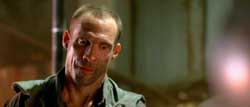
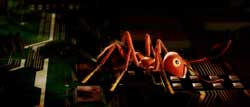
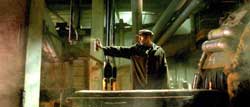
I joined the project after the initial producer was fired. The film had already received funding and the script was locked off, so I proceeded immediately to getting the film made without questioning the script. When it became apparent that AEROSOL was not winning any prizes I finally analysed the story's structure, which revealed another good reason why the first producer should have been fired: he didn't have a clue about story. The film lacks a second act.

AEROSOL starts with the ordinary life of a worker, whose routine is soon disturbed by an ant: the inciting incident. Then starts a cat-and-mouse game between the two, which lasts until a major reversal. In a classically told story this reversal would have been the First Act Turning Point, defining the protagonist's objective. Instead what follows feels very much like a Third Act, with the ant now being the more active character and the only one showing a visible objective. Finally, a poetic epilogue ponders over the things that matter in our society. The ending leaves our characters' journeys very much open.

Regardless of its structure, AEROSOL is a beautiful statement and many people have genuinely enjoyed the film as a wonderful piece, both artistically and philosophically. But emotionally, it does not fulfill our instinctive needs for a three act story.

Looking back, it was an obvious oversight of myself to not critically examine the film's storyline (and I shouldn't blame the first producer no matter how little he cared). But how many of us really do analyse the structure of short films? In the case of AEROSOL, even the FTO assessors didn't pick up on the story flaws although a rewrite would have taken a fraction of the effort it took to produce the film. And the film would have won prizes.

If you want to read more about structure for short films, you might check out Writing Short Films by Linda Cowgill, who came to the same conclusion, only seven years earlier.


RECOMMENDED: THE HERO'S 2 JOURNEYS

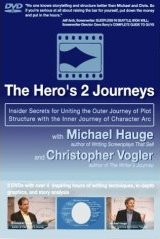
Last year I purchased POWERSTRUCTURE from the guys at WriteBrain and they offered a massive discount on a DVD box set called THE HERO'S 2 JOURNEYS. They explained it was voted DVD of the year or something by the Australian Cinematographers Society. I wasn't turned off the idea so much by the ACS reference - I'm about to believe our DOPs understand story better than our screenwriting teachers - but there is something very inconvenient about screenwriting theory on a video/DVD. I did end up paying the additional USD$$$ because 1) the discount was really huge and 2) I love the guys at WriteBrain, they know their stuff.

Lucky. This is pure gold. Michael Hague talks in crystal clear terms about what makes a good protagonist and what are the essential steps for an outer journey to work. Next, Christopher Vogler sheds some light on the workings of the hero's inner journey. In a strong drama the one never goes without the other, so it makes perfect sense to discuss the hero's 2 journeys together and this DVD set does it brilliantly. Finally the theory is applied to Steven Soderbergh's blockbuster ERIN BROCKOVICH. Another stroke of luck: I found a perfect way around the inconvenience of the medium. A software program called DVD Audio Extractor literally changed my life. I now rip DVD sound to mp3 and listen to it on my Creative Zen while walking the dog. The same way I listen to DVD commentaries. I recommend you do the same and keep THE HERO'S 2 JOURNEYS among those mp3s you never delete from your player (like Robert McKee's audio book version of STORY).