First, Break All the Rules
 When I asked this student which one thing she remembered above anything else, she replied: “That you can break the rules, and get away with it.” She was not my student. In itself there’s nothing wrong with trying, but it saddens me that Heath Ledger’s last Australian film, Candy, was an example of a film that broke the rules. And failed.
I am not sure which film this student had in mind as a successful example of non-conventional structure, but I bet you it was PULP FICTION. Ever since 1994, filmmakers have been hoping to get away with it in the same way Tarantino did. In my view PF has done far more damage to the craft of screenwriting than its success will ever justify. The irony is that PULP FICTION is relatively conventional in its structure, just not linear. Check Linda Aronson's book SCREENWRITING UPDATED.
But all that is completely beside the point. The point is that writers often have this immature attitude. "But my script is different." Another one that keeps coming back: "Hollywood only makes crap, audiences really don't want to see that stuff anymore." This one I only heard today: "It all works in my head, the film experience will be very different from the script!" Call me conservative but the more I learn about film, the more I am convinced audiences are conditioned by an increasingly structured type of filmmaking. Time and time again I hear people rejecting structure one minute, and raving about highly structured films the next.
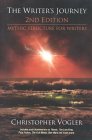
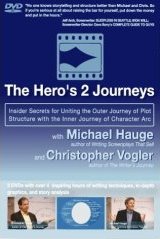
Ever since the story of a boy and a princess in space 30 years ago, audiences - whether you like it or not - have been conditioned by a more sophisticated version of the 3-act structure, i.e. the Hero's Journey. And this process has only been reinforced since that paradigm was written down by Christopher Vogler. (I almost called The Hero's Journey 'a structure' but it was never really intended to be. Yet it can often be elegantly blended with the three act structure.)
LEARN THE RULES, THEN BREAK THE RULES Despite my endless complaints about Australian writers, I have had the pleasure and honour of meeting and working with dozens of writers who are dedicated to learning the craft. They read, study, analyse, attend seminars etc.
Most of them learn with the intention of later applying what they have learned. Others take the basics on board and explore ways of being original and creative within the boundaries. Yet others fully intend to knowingly break the rules with their first screenplay.
Now that may be unwise.
The statement above reading "Learn the Rules, then Break the Rules" is in my view a dangerous one. I would rather replace it with something like:
"Master the Rules, then Bend Them."
It often happens that screenwriters only get their first screenplay made after years of learning the craft. When the film finally hits the screen, they realises that although they believed they had learned the skills, they hadn't. An audience is a funny thing. You want them to feel this way, but they respond that way.
As a writer you won't know if you actually master the craft until the film goes out and is successful. Believing that you can learn the rules and break them with your first script, is a dangerous illusion.
Of course every year there will be at least one success story of a breakthrough screenplay that didn't apply the principles. Everybody will write and talk about that one person. Bottomline: if you are in this game for the long term, it pays to look at the statistics and then review your chances.
THE ONE THAT GOT AWAY I am currently working with a client on a screenplay that reminded me in some peripheral way of the French rural drama Jean de Florette, starring Gerard Depardieu and the late Yves Montand*. I watched the film again with my wife and paid attention to its structure.
Although I had seen the film at least twice before, what I found out this time, literally blew me away.
The screenplay was adapted by director Claude Berri and veteran scribe Gerard Brach, from a hugely successful original French classic by Marcel Pagnol. The film had been a breakout arthouse hit across the world, with major prizes in its home country but also in England and the U.S. where it was nominated for a Golden Globe.
My wife and I had seen this film last about ten years ago, yet neither of us remembered much of the plot. We did remember the characters and even individual scenes. Not the plot.
Why??
Because the structure is quite extraordinary.
The whole film is structured following a text-book three-act structure. Inciting incident, first act turning point, second act are all 'tres formulaic'. But what seemed unusual to me, and the primary reason why I think this film still looked so fresh to us: the story is structured around the antagonist's journey. My advise: don't try this at home. As a beginning screenwriter, make sure you try your hand at convential material before you venture into this type of territory. The screenwriters of Jean de Florette were both highly experienced, with many successes to their names. Unfortunately, although the follow-up to Jean de Florette (Manon des Sources) may have brought a more upbeat closing to the rural saga, the writing was less inspiring.
When you have the chance, do watch both films, analyse these structural exceptions and asks yourself what is different, why this one works and the other doesn't (so well).
It is always fascinating.
*Nice coincidence: when I was out the following night my wife randomly picked the Marilyn Monroe classic "Let's make Love" from our DVD shelf and watched it, only to find it had - again - Yves Montand in a major role.
THE WORKSHOPS WORK More than one week to go until 10 February and the Sydney story workshop is sold out. This weekend I'll be teaching for the first time in Queensland, at the International Film College. My next Sydney Workshop will be on Sunday 13 April and bookings are open now.
The emphasis of the workshops has shifted slightly. The first sessions were heavily theoretical, focusing on aspects of the 3-act structure. Lately I have shifted towards more practical examples from a wider diversity of films, both old and recent, across completely different genres: from action movie to comedy, from Touch of Evil (1958) and Die Hard (1988) to The Incredibles (2004) and The Lives of Others (2006).
Some people find that the material taught in these classes is advanced. Let me tell you this: it is not. It represents the bare essentials. It is the absolute minimum you need to know if you want to even consider breaking into the scene. That doesn't mean that it will sink in the first time around. You will still need to watch films, analyse them and apply what you have learned to your own work.
Next, you will need to call in the assistance from a professional. But you will be so much better prepared to enter into a dialogue about your work if you have laid the foundations by learning the terminology. Not only will it speed up your development, it will potentially save you hundreds or thousands of dollars as your script editor will talk to you about your script on your level.
THE PREMIUM EDITION The Premium Edition has had visitors from New York to the country of Jean de Florette (Provence, South of France), from Australia's East and West Coasts to the City Library of Amsterdam. Meanwhile, the first paying subscribers have signed up, from Australia and overseas!
Eight users are online while I am writing this, of which no less than seven guests and a few search engine spiders. Check it out for yourself by subscribing for a year at only the cost of one cappuccino a fortnight.
Among the newly added content, Premium Members now have also access to a list of mistakes I have come across in screenplays lately, as well as a few suggestions on how to avoid them.
In the coming days and weeks new articles will be added and I will be conducting an interview with Michael Hauge (who is coming to Australia this May) and will talk about the dangers of mystery.