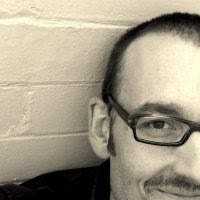
Creative Master Ron Cobb
Did you know the story at the basis of what later became E.T. started with a pitch to Spielberg at a Paris hotel? On Friday I was sitting opposite the very man who pitched to Spielberg back in the late seventies. I listened to that same pitch. One of those moments you don't lightly forget...
The man sitting opposite me (and Spielberg) was Ron Cobb, who worked in a completely different capacity on other movies such as Alien, Back to the Future, The Abyss and Southland Tales (the last movie by Donnie Darko director Richard Kelly). Next week, Ron will be at the AFTRS Sydney screening theatre for the first Creative Masters Forum.
Now, why am I telling you all this? (prepare for the shameless plug)
Because I produced a documentary interview with Ron and I'll be hosting two sessions at the Creative Masters Forum, which is all about Ron's life and work. Legendary Australian cinematographer Don McAlpine will also be part of one of the sessions and I'll be talking with Rod March, co-writer and director of my latest 3D animation TIN CAN HEART. This film will have its world premiere on the launch night of the conference.

The man sitting opposite me (and Spielberg) was Ron Cobb, who worked in a completely different capacity on other movies such as Alien, Back to the Future, The Abyss and Southland Tales (the last movie by Donnie Darko director Richard Kelly). Next week, Ron will be at the AFTRS Sydney screening theatre for the first Creative Masters Forum.
Now, why am I telling you all this?
Because I produced a documentary interview with Ron and I'll be hosting two sessions at the Creative Masters Forum, which is all about Ron's life and work. Legendary Australian cinematographer Don McAlpine will also be part of one of the sessions and I'll be talking with Rod March, co-writer and director of my latest 3D animation TIN CAN HEART. This film will have its world premiere on the launch night of the conference.
If you like the sound of all this, but your focus is more on writing and less on the design side of movies, here is an offer you cannot refuse:
Details are below.
If it's not for you, please pass it on to your scifi geek friend.
www.creativemastersforum.com
EXCLUSIVE OFFER
Join us for the first Creative Masters Forum (www.creativemastersforum.com), on Tuesday 21 October at the new AFTRS Sydney screening theatre in the Entertainment Quarter.
The day focuses on the legendary writer, designer, concept artist Ron Cobb and among the forum participants are other Australian masters such as cinematographer Don McAlpine.
Ron will be talking about his life and career and answering questions during two public sessions, hosted by myself (Karel Segers). I also produced a feature interview documentary on Ron of which all delegates will receive a copy.
DOUBLE TICKET
This week only, The Creative Masters Forum and The Story Dept. are offering an exclusive double ticket. For $660 you will be able to attend the full day conference plus the four Story Department Spring seminars. This package is valued at $1,550 if booked individually.
ABOUT RON COBB
As a writer, Ron wrote an episode of THE TWILIGHT ZONE and he sold an idea to Steven Spielberg that later became E.T.. He directed the 1992 feature film GARBO.
But Ron is best known for his art, which has had a profound influence on modern popular culture through his work with the likes of Steven Spielberg, George Lucas, Ridley Scott & Jim Cameron. His artistic talents have been commissioned by these iconic directors to assist them developing their vision from concept to creation, and ultimately to the big screen.
Ron Cobb's screen credits include ALIEN, CONAN THE BARBARIAN, RAIDERS OF THE LAST ARK, BACK TO THE FUTURE, ALIENS, THE ABYSS and many other classic science fiction movies.
OFFER DETAILS
Details of the conference are here: http://www.creativemastersforum.com.
Details of the screenwriting seminars are here: http://storydr.com/story-sydney
Book the seminars before Sunday 19/10 and get the double package (value £$1,550) for only $660.
BOOKINGS:
Phone: xxx
Email: xxx
Web: www.storydr.com
The day focuses on the legendary writer, designer, concept artist Ron Cobb and among the forum participants are other Australian masters such as cinematographer Don McAlpine.
Ron will be talking about his life and career and answering questions during two public sessions, hosted by myself (Karel Segers). I also produced a feature interview documentary on Ron of which all delegates will receive a copy.
DOUBLE TICKET
This week only, The Creative Masters Forum and The Story Dept. are offering an exclusive double ticket. For $660 you will be able to attend the full day conference plus the four Story Department Spring seminars. This package is valued at $1,550 if booked individually.
ABOUT RON COBB
As a writer, Ron wrote an episode of THE TWILIGHT ZONE and he sold an idea to Steven Spielberg that later became E.T.. He directed the 1992 feature film GARBO.
But Ron is best known for his art, which has had a profound influence on modern popular culture through his work with the likes of Steven Spielberg, George Lucas, Ridley Scott & Jim Cameron. His artistic talents have been commissioned by these iconic directors to assist them developing their vision from concept to creation, and ultimately to the big screen.
Ron Cobb's screen credits include ALIEN, CONAN THE BARBARIAN, RAIDERS OF THE LAST ARK, BACK TO THE FUTURE, ALIENS, THE ABYSS and many other classic science fiction movies.
OFFER DETAILS
Details of the conference are here: http://www.creativemastersforum.com.
Details of the screenwriting seminars are here: http://storydr.com/story-sydney
Book the seminars before Sunday 19/10 and get the double package (value £$1,550) for only $660.
BOOKINGS:
Phone: xxx
Email: xxx
Web: www.storydr.com